
Lake County Traffic Warrants Explained
A traffic warrant is a court order tied to a citation or a misdemeanor traffic case. Civil infractions usually end in a default and a license consequence instead. A misdemeanor traffic case can bring an arrest order once the court finds the required grounds. In Lake County, the 78th District Court handles traffic, misdemeanor, and ordinance files. The clerk can tell you which event is actually current on the case. That answer matters more than the label on the ticket. A court warrant is a judicial record. A driving record, a points total, and an insurance rate are separate state and private products, and none of them says whether a court order is open.
The Lake County Trial Court Payment Screen, Field by Field
The Lake County online payment screen counts money; it checks no warrant status. Five fields stand between you and the payment going through.
| Field | Type | Required | Notes |
|---|---|---|---|
| Defendant name | Text | Yes | First, middle, and last name |
| Date of birth | Text | Yes | MMDDYYYY format |
| Case number | Text | Yes | The court case number |
| Ticket number | Text | Yes | The citation number from the stop |
| Payment amount | Currency | Yes | The amount the court or system directs |
The official screen names vendor code PLC 1415 and routes Lake County payments through Allpaid. The Trial Court payment page spells out each required field and the payment route itself.
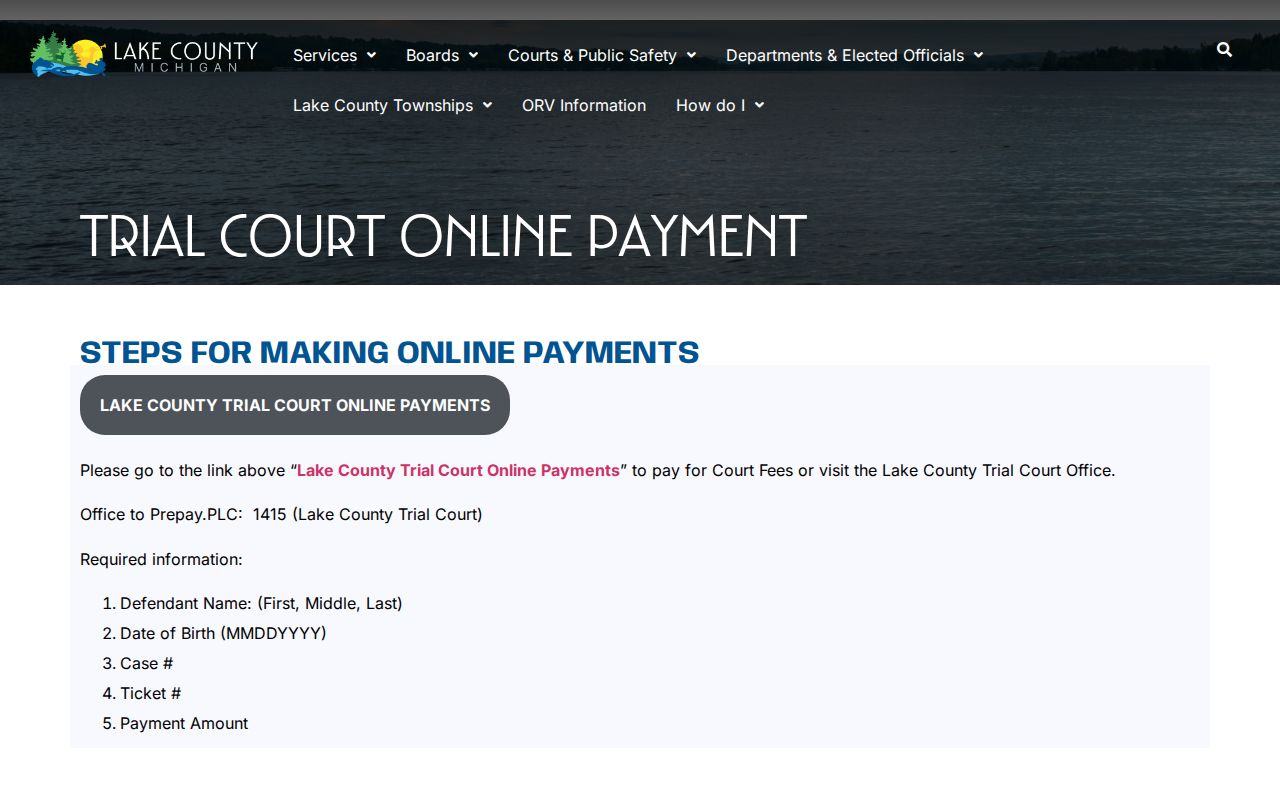
Without a ticket number, the payment stalls, so call the Lake County court when yours is lost.
Checking for a Traffic Warrant
Begin with the notice in hand in Lake County. Then work outward from there, since each step answers one piece of the warrant question.
- Read the citation and note the court, the ticket number, and the date that was missed.
- Search the state's public case search by case number or name.
- Call the 78th District Court at 231-745-4614 and ask whether a warrant, a default, or a license notice is active.
- Ask whether the court accepts an online payment or wants an appearance instead.
- Call the sheriff only for service or custody questions.
- Keep every receipt and every written answer.
Inside a Traffic Warrant Record
Several events in a Lake County traffic file can look like twins at a glance, but the court record keeps them distinct.
| Court and case | The 78th District Court file number |
|---|---|
| Violation | The cited offense and its classification |
| Citation date | When the officer issued the ticket |
| Missed date | The answer deadline or hearing that was skipped |
| Trigger | Default, failure to appear, or a misdemeanor complaint |
| Status | Open, paid, warrant issued, or warrant recalled |
Note: Lake County posts no local ticket or case-number format, so rely on the numbers printed on your notice.
Why a Lake County Payment Receipt Does Not End the Case
Paying clears the debt alone. It neither recalls a warrant nor restores a license on its own, and a Lake County judge or clerk must act on the case before either happens.
Caution: keep the receipt and ask the court when it will report compliance. A payment alone does not prove the warrant is gone.
When the amount is out of reach, another route may fit better. A payment plan, a new hearing date, or a set-aside lets the Lake County court decide the case instead.
How to Pay or Lift a Traffic Warrant
What Lake County says is open sets the route. Follow the steps in order and note each answer the court gives you.
- Read the citation or the notice and identify the court and the ticket number.
- Confirm the case and the missed date with the District Court.
- Ask which options the court allows: payment, a new date, a hearing, a payment plan, or an appearance.
- If the county payment page applies, use the official link and save the confirmation.
- Ask when the court reports compliance and whether a judge must sign anything else.
- Confirm the warrant status after the court acts, and calendar any new date.
Traffic Warrants, FTA, and License Holds
One missed deadline in Lake County can lead to three separate outcomes, and each has its own fix.
| Outcome | What triggers it | Where it is resolved |
|---|---|---|
| Default judgment | No answer to a civil infraction | The District Court, by payment or a new date |
| Traffic warrant | A misdemeanor traffic case with the required grounds | The District Court, through an appearance or recall |
| License suspension | Notice and noncompliance reported by the court | The court first, then the state licensing process |
A failure to appear can stack all three. A default never clears the warrant, and clearing the warrant never lifts a license hold.
Default and License Suspension in Lake County Traffic Cases
Michigan law allows a Lake County court to notify the Secretary of State when a driver fails to answer or comply. That notice starts its own process on its own schedule. Before the state acts, the court must send a compliance report. The state court guidance on failure to comply walks through the notice and suspension sequence for unpaid judgments.
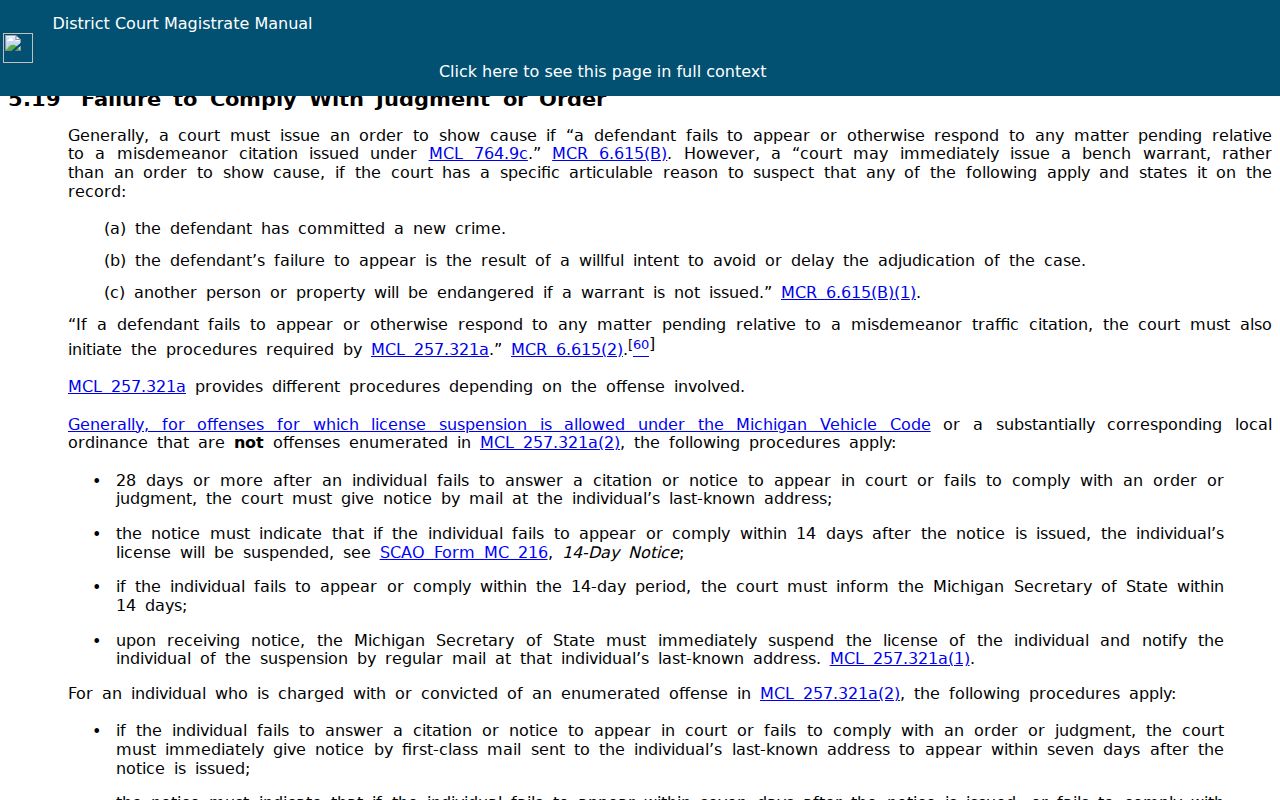
Ask the Lake County District Court how and when it reports compliance. The license hold and the warrant clear on different tracks.
Key point: a license consequence is a state action that follows a court notice. It is not the same record as a court warrant, and only the court can confirm what the warrant requires.
A Lake County Ticket From Baldwin or Luther
Where a Lake County ticket was written decides who handles the paperwork, not who decides the case.
| Baldwin village office | 620 Washington Street, 231-745-3587, Monday through Thursday, 8:00 a.m. to 4:00 p.m. |
|---|---|
| Luther village office | 301 State Street, 231-942-8739, office hours by appointment |
| Court case | 78th District Court at 800 Tenth Street in Baldwin, 231-745-4614 |
| Service question | Lake County Sheriff at 1153 Michigan Avenue, 231-745-2712 |
The village office can tell you which department wrote the ticket. The municipal warrant page explains why a village citation still lands in a county court.
No Dedicated Lake County Traffic Warrant Portal Was Found
Lake County publishes no dedicated traffic-warrant search, no active warrant list, and no online warrant lookup. The payment page takes money and tells you nothing about status. A warrant lookup walks through the case search and the court call in the order that works, though the phone call to the District Court remains the fastest route to a real answer. The county FOIA channel can produce a written non-exempt record, but a records request is not a ticket response, so the court call still comes first. Note: Confirm any warrant status with the court, because a payment screen and a case search cannot answer that question on their own.