
Lake County Arrest Warrants Explained
An arrest warrant is a court order, nothing less. It tells an authorized officer to take a named person into custody and bring that person before a judge, and it never starts at a police station desk. The process begins with a complaint filed in court. In Lake County, that filing may land in the 27th Circuit Court for a felony or in the 78th District Court for a misdemeanor, a traffic matter, or an ordinance case. The judge who reads the complaint then decides between issuing a summons and issuing a warrant. There is no public sheriff warrant list here, so any warrant search starts with the court that holds the file.
Inside the Lake County Probable-Cause Review
Michigan Court Rule 6.101 defines the complaint itself. It is a written accusation that names or describes the accused and states the offense charged. From there, the Lake County judge decides whether the case may move forward at all.
- The prosecutor files the complaint with the court.
- The judge reads the complaint, any affidavit, and sworn testimony kept for review.
- The judge decides whether probable cause exists.
- The court issues a summons by default unless the rule's exceptions apply.
- If a warrant is issued, the court signs an order with a command to arrest and any interim bail.
Probable cause only asks if the facts are strong enough to proceed. It settles nothing more. The Lake County case itself gets decided later.
Inside a Lake County Arrest Warrant
Every Lake County warrant must do four things. It identifies the person, describes the offense, directs an authorized officer to bring that person before a judicial officer, and carries the court's signature. When the court sets interim bail, that amount appears on the face of the warrant.
| Accused | Name or a description sufficient to identify the person |
|---|---|
| Offense | The charge and its place in the criminal code |
| Authority | Issuing court, judge, signature, and date |
| Command | Direction to an authorized officer to arrest and bring the person before a judge |
| Release | Interim bail when the court sets it |
| Return | The officer's report after execution or attempted service |
Lake County posts no local warrant-number format. When you call the clerk, use the case number the court gave you instead.
Serving Arrest Warrants in Lake County
A peace officer authorized by law executes the warrant and returns it to the issuing court. For service and custody questions in Lake County, the county sheriff is the main contact. City and village officers may act as well.
Lake County Sheriff's Office
1153 Michigan Avenue, Baldwin, MI 49304
231-745-2712
Administrative hours Monday through Friday, 8:30 a.m. to 5:00 p.m.
Lake County Corrections
1153 Michigan Avenue, Baldwin, MI 49304
231-745-6201
Custody and detention questions after a court order
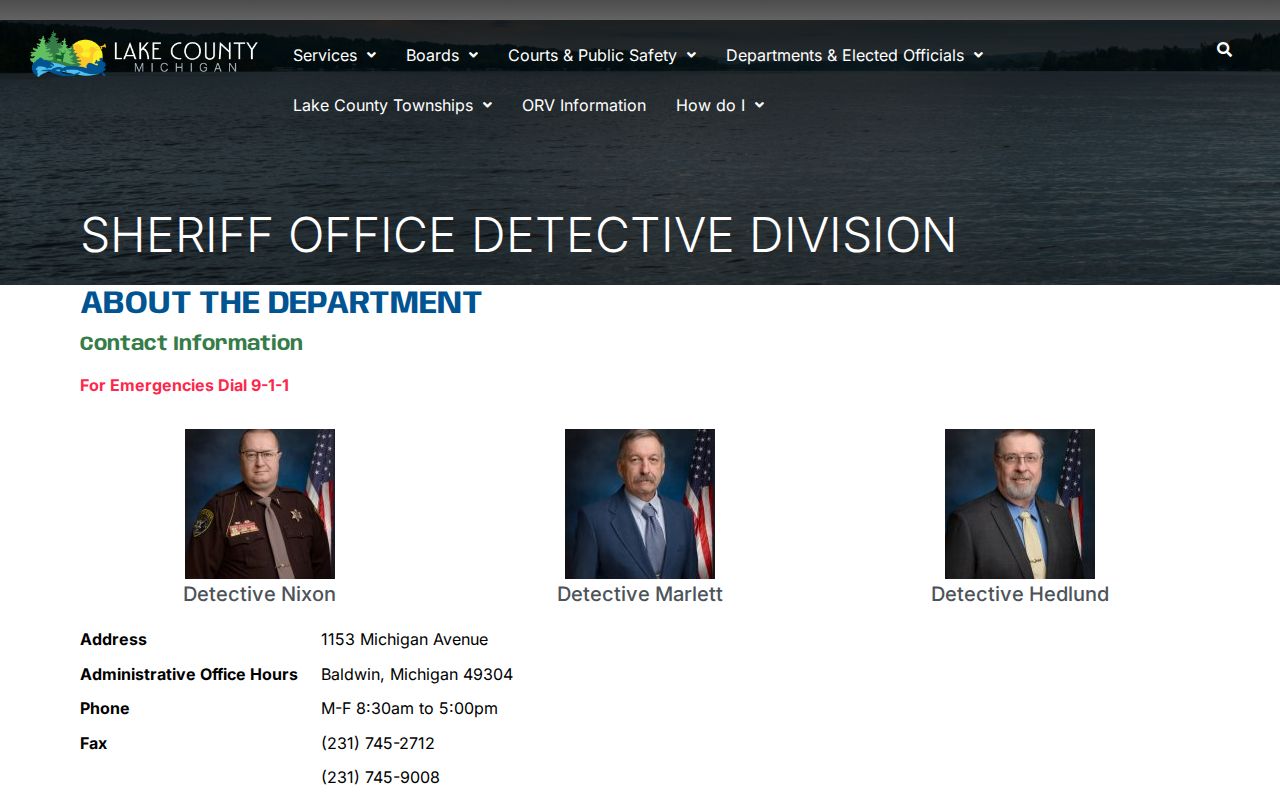
The Detective Bureau page shows the office address and department description for county investigations.
Lake County publishes no service roster and no after-hours surrender procedure. Call ahead before driving to the Michigan Avenue office.
The Lake County 48-Hour Window and Voluntary Appearance
Two state rules shape what happens when an arrest order is possible. Under Michigan Court Rule 6.103, a court generally waits 48 hours after a first failure to appear before issuing a bench warrant. Exceptions exist for assaultive allegations, a prior missed date, and public safety concerns. Michigan Court Rule 6.105 covers the voluntary route. Someone who comes to the issuing court within one year can be arraigned quickly, or the warrant can be recalled and a new date set. That option closes for assaultive or domestic violence offenses, and for a person who already used the rule once. Note: These are statewide court rules, not a Lake County walk-in policy, so confirm with the court what it will accept before you travel.
Comparing Arrest, Summons, and Bench Warrants
Three different court orders can reach the same person in Lake County. Each one asks for something different, so it pays to know which paper you are facing.
| Order | How it starts | What it commands | First step |
|---|---|---|---|
| Arrest warrant | A complaint and a probable-cause finding | Custody and a court appearance | Call the issuing court and a lawyer |
| Summons | A complaint with no arrest needed | An appearance on a set date | Show up or send counsel |
| Bench warrant | A missed date or unmet condition in an open case | Arrest to answer the existing case | Call the court that owns the file |
A summons is the normal starting point for a Michigan criminal case. The arrest warrant is the exception that the rule allows, and Lake County judges reach it only when the facts call for it.
Why an Empty Lake County Search Proves Nothing
The state's public case search lists court cases, and it does not flag every warrant. A blank result proves nothing. A sealed complaint, a restricted file, a case sitting in another court, or a filing made today may not show up. Officers also work from LEIN, a system closed to the public, so a Lake County warrant can be active even when the online search looks clean.
Caution: treat a blank result as a blank result. Only the issuing court can say whether an arrest warrant is active.
A written request to the Lake County FOIA coordinator can reach a non-exempt county record, though the response period runs five business days. For a court-status question, the shared Trial Court number, 231-745-4614, is faster. How a missed court date turns into a court order is covered under Lake County bench warrants.
If There's an Arrest Warrant for You
Call a lawyer before anything else. An attorney can confirm the Lake County case, contact the issuing court, and arrange an appearance that avoids a surprise arrest.
Urgent: do not ignore an arrest warrant and do not walk into a police station without a plan. Ask the issuing court about a voluntary appearance, the release conditions, and what to bring.
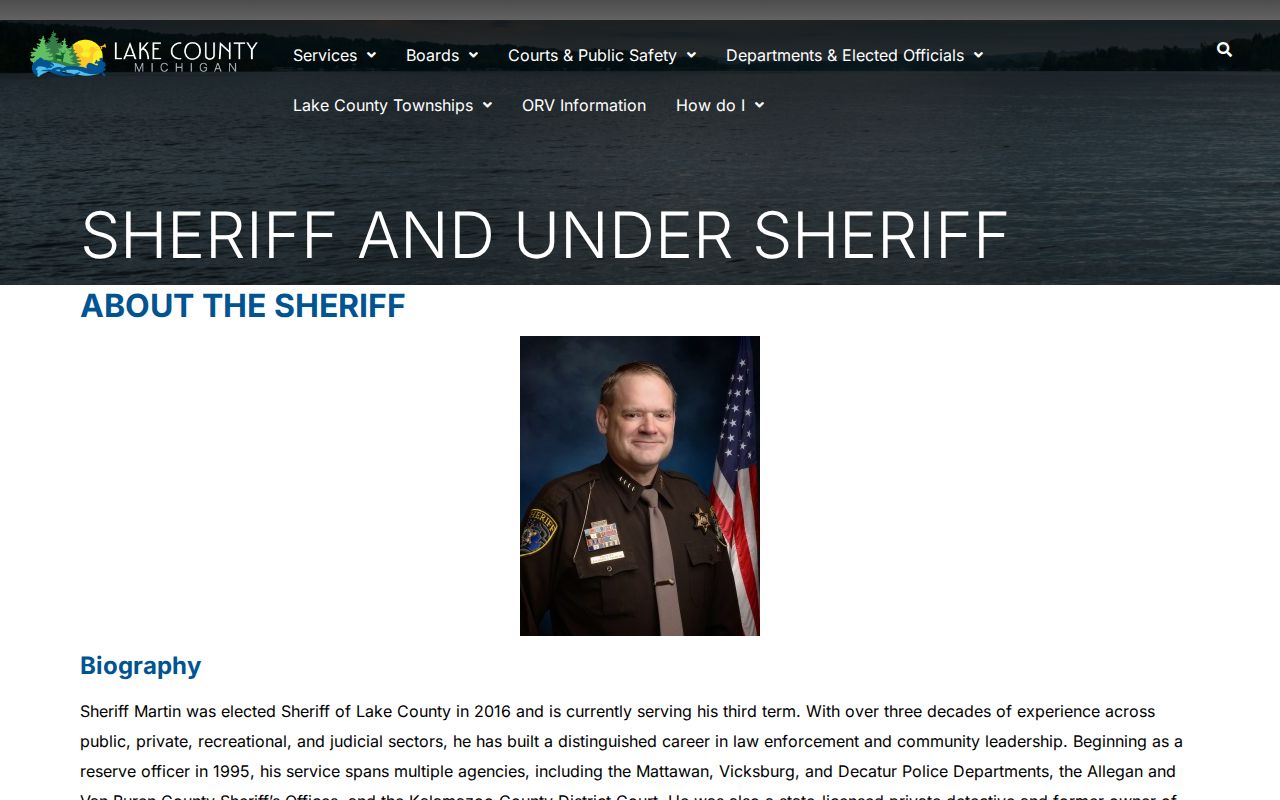
The county leadership page names the sheriff and undersheriff who head the Lake County office that carries out court orders.
That office answers service questions, but it does not set or recall a warrant.
What a Lake County Arraignment Decides
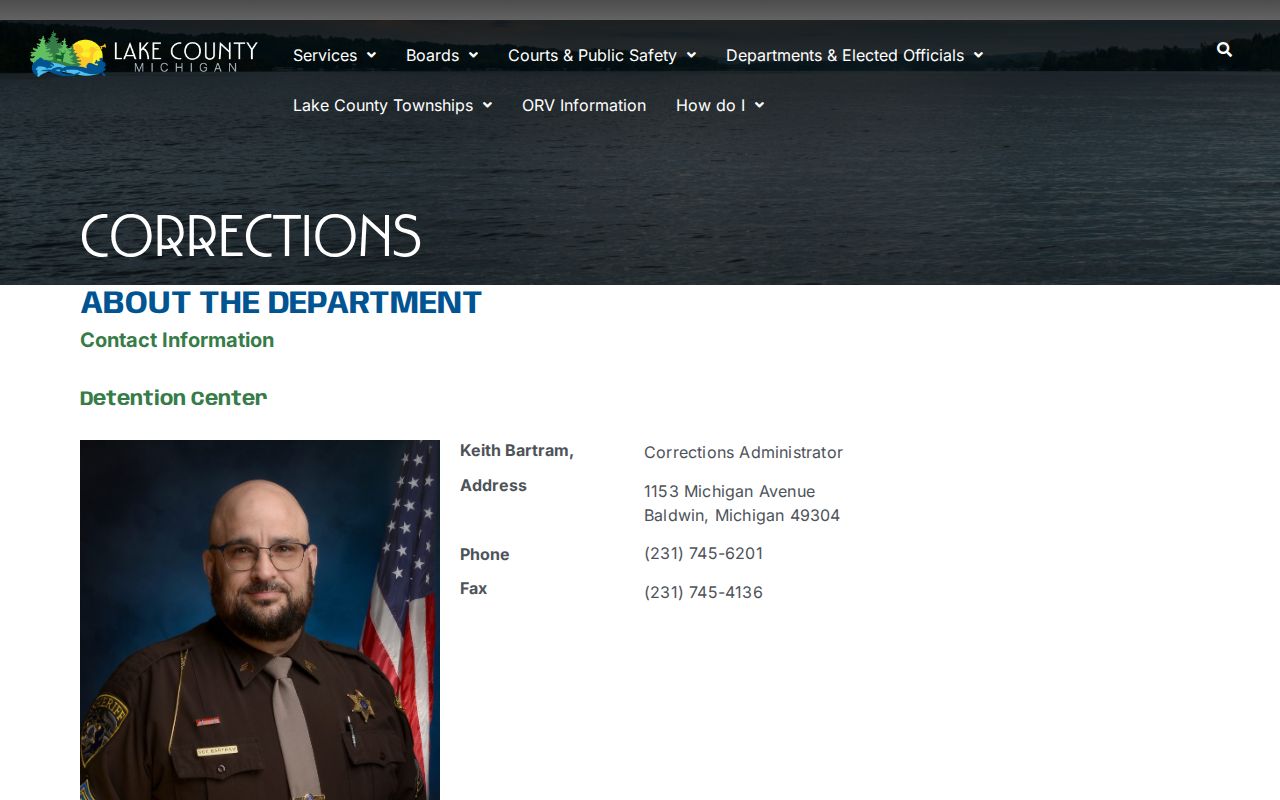
After an arrest, Michigan Court Rule 6.104 requires an arraignment without unnecessary delay. At that hearing the judge states the charge, the possible sentence, the right to remain silent, and the right to counsel, including appointed counsel for someone who cannot afford a lawyer. Release is decided at the same hearing in Lake County. The charge itself is answered later, through future court dates or a plea. The corrections page describes the detention facility at the Michigan Avenue address.
A custody question is not a court question. Keep the two Lake County calls separate, since each office answers only its own side.
After a Lake County Arrest Warrant Is Served
An arrest does not end the case. It just moves the case to its next step. Michigan Court Rule 6.106 lists the release options a court may weigh, from a simple promise to appear to a conditional release or a money bond. Lake County publishes no bond schedule, so ask the issuing court what it has set. Keep every receipt and every order, and get the next court date confirmed in writing. Note: A release decision settles nothing about the charge, so treat release and the charge as two separate questions with two separate answers.